
Welcome to KindyROO!

Dear parents,
welcome to KindyROO – an early childhood development programme that gives you a clear direction on how to support your child from the first weeks through to school.

Each week you receive easy, enjoyable and proven-effective games and movements that:

  • support brain development
  • strengthen the body
  • build attention, memory and confidence

All of this through play, movement and the connection between you and your child.

Why do we have 9 classes before a child starts school?

Because in the first 7 years a child does not simply grow – they build the foundation for how they will learn, think, move and manage their emotions.

During this period, the following are formed:

  • attention and concentration
  • memory
  • coordination
  • the ability to self-calm and follow instructions

KindyROO divides these key stages into 9 age-appropriate classes so that each child receives exactly what their brain and body need at that moment.

How is the academic year structured?

The academic year is divided into 4 terms. Each term has a clear theme and focuses on:

  • language development
  • thinking and attention
  • memory and learning skills
  • motor and coordination skills

This means development is not chaotic – it is step-by-step, logical and consistent.

How to enrol

Enrolment is easy, quick and fully online – at any time. You do not need to wait for a new term. Brain development does not pause – it happens every day.
Just three steps:

1. Choose a city and centre

2. Choose a convenient day and time

3. Pay online

Enrol now

If you have questions, you can always speak with your KindyROO teacher – we are here to support you.

What parents get from KindyROO

KindyROO is not only a class for the child. It is a supportive system for parents that helps them feel more confident, calmer and better prepared at every age.

🧠 1. Clarity: “Am I doing the right thing for my child?”

Most parents live with a constant question: “Am I doing enough? Are they developing as they should?”
At KindyROO they receive:

  • support and community – practical value and enjoyment
  • a clear guide to what matters at each age

This reduces anxiety and replaces guesswork with understanding.

🧩 2. Every week – new ideas for awake time

Parents are not left wondering, “What should I do with them now?”
In every class they:

  • see new games and movements
  • learn how to stimulate thinking, emotions and the body
  • get ideas they can repeat at home

Awake time becomes easier, more meaningful and less exhausting.

💞 3.A calmer child = a calmer parent

Through movement, sensory stimulation and massage:

  • the child’s nervous system is regulated
  • tension, crying and overload are reduced
  • sleep and concentration improve

Parents learn to recognise their child’s signals and respond appropriately.

🧍‍♀️ 4. More confidence: “I understand my child”

Parents begin to:

  • read their child’s signals more easily
  • know when their child is tired, overstimulated, or needs movement
  • respond more confidently and calmly

The parent-child relationship is strengthened every day.

🧠 5. Development of the body, mind and emotions

Parents see how movement supports:

  • attention and concentration
  • language and thinking
  • emotional regulation
  • self-control

They gain a holistic picture of how physical development supports learning and behaviour.

🧭 6. Less “Dr Google”, more confidence

Instead of navigating contradictory advice, parents have:

  • structure
  • consistency
  • a programme aligned to brain development

This creates calm and trust that they are investing their time and care in the right stimulations.

What is the most important skill a child develops at each age?

Explore the 9 KindyROO classes and see how key skills develop:

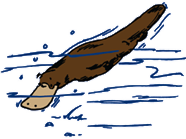
🐣 Class Platypus (from 6 weeks to crawling)

Focus: a calm start, a strong body and a strong parent-baby bond

At this stage we help the baby adapt to the world outside the womb and begin building their first movements, sensations and communication.
How we support:

  • Tummy time – builds strength in the neck, back and shoulders, supporting later rolling, crawling and sitting
  • Baby massage – calms the nervous system, improves sleep and helps the baby feel safe in their body
  • Body awareness – through touch and close contact, the baby begins to understand where they end and the world begins
  • Voice and music games – support early communication and build a strong emotional bond with the parent
  • Rocking and gentle movement – develop balance and help the baby feel stable and calm

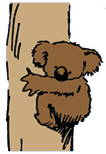
🐨 Class Wombat (from crawling to walking)

Focus: a strong body, confidence and control

This is the period when the baby becomes a little explorer.

  • Sensory games – help the brain organise information from all senses
  • Crawling and climbing – build a strong foundation for posture, balance and coordination
  • Special music and rhythm – support focus and movement
  • Massage and deep pressure – calm and improve body awareness

🐧 Class Penguin (from walking to 18 months)

Focus: balance, stability and following first instructions

  • Better balance and fewer falls
  • A stronger body for new movements
  • The child starts to follow simple instructions
  • Games for attention and auditory memory

🐨 Class Koala (18 months to 2 years)

Focus: climbing, thinking and confidence

  • Jumping and climbing for strength and control
  • Massage for calm and better sleep
  • Colours, instructions and early logic
  • Development of hands and fine motor skills

🦘 Class Wallaby (2 to 2.5 years)

Focus: coordination and readiness to learn

  • Better balance and confidence
  • Dance and rhythm to support the brain
  • Replacement of infant reflexes with mature movement patterns
  • Preparation for more complex skills

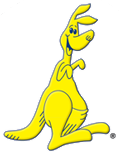
🦘 Class Kangaroo (2.5 to 3 years)

Focus: organising the body and thinking

  • The two sides of the brain start working together
  • Better planning and control
  • The child completes 2-3 sequential tasks

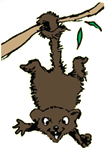
🐾 Class Opossum (3 to 4 years)

Focus: movement, social skills and self-confidence

  • Running, jumping and rolling
  • Teamwork games and waiting skills
  • Development of attention, hearing and vision

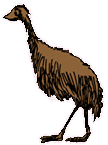
🐦 Class Emu (4 to 5 years)

Focus: concentration and school readiness

  • Ability to sit for longer and sustain attention
  • Better posture and pre-writing skills
  • Games with rules and teamwork

🦇 Class Flying Fox (5 to 7 years)

Focus: confidence, thinking and school success

  • Concentration, planning and self-control
  • Emotional stability
  • Coordination and social skills
  • Preparation for school and life

Every age has its key skill.

We help your child develop it naturally, confidently and with joy.
Contact us for more information.
KindyROO


Програмата е създадена в Австралия през 1982 г. от Маргарет Сасе, майка на пет деца и специалист по ранно детско развитие. Три от нейните деца и днес се занимават с развитието започнатото от нея.
КиндиРу присъства в над 15 страни и насърчава естественото и здравословно израстване на бебетата и децата до 5-годишна възраст. Помага и за предолояване на невро-моторни състояния на незрялост при бебета, деца и подрастващи.

Успехът на програмата се крие в последователното надграждане и работа за стимулиране на съответните двигателни и сензорни преживявания, които да подпомогнат правилното развитие на мозъка.

Няма да ви отегчаваме с лекция по неврология, но всички знаем, колко безпомощно е новороденото и колко години минават, докато стане самостоятелен индивид. Това е така, защото след раждане действаме на ниво първични рефлекси с функция „оцеляване” и от мозъка „работят” много силно гръбначният мозък,  мозъчният ствол и изобщо така наречените му „ниски етажи”. Докато се премине през последователно „включване” на различните части и центрове на мозъка, за да започнат да функционират висшите функции и мисленето, трябва да се случат много неща.  Целият този процес на интегриране протича постепенно, чрез различни сензорни и двигателни стимулации. Така се създават по най-оптимален начин мозъчните „връзки”, които са ни необходими, за да функционираме като здрави, пълноценни и мислещи личности. Едно дете с добре интегрирани мозък и тяло ще има потенциала да научи много по-лесно четене, писане и математика и да развие своите таланти в пълна степен.

За да се гарантира актуалността на програмата, екипите на КидниРу в целия свят, и особено в централата ни в Австралия, следят и внедряват новости от редица области като педиатрия, педагогика, психология и неврология. Доктор Джейн Уилямс, директор научно-развойна дейност на КиндиРу, е признат автор с множество научни публикации и работи с водещи световни експерти. Тя редовно посещава България за среща с родители и за регулярни обучения на екипа ни от специалисти, които работят с вас и вашите деца. За нас повишаването на квалификацията и уменията ни е от първостепенно значение, тъй като искаме да сме максимално полезни на вас и децата ви.

Нашата цел е бебетата и малките деца да имат възможността да преминат всички етапи на своето развитие по най-добрия начин и да са подготвени за постъпване в училище. За да се развие пълният потенциал на децата, е необходимо неврологичната им възраст да е поне на нивото на хронологичната такава. Нашите деца постигат прекрасни успехи в тази посока.

В клас Платипус ще ви научим как чрез песни и движения да стимулирате своето бебе. Ще Ви информираме за това, което се случва в различни области на развитието му.

Новородените и съвсем малки бебета виждат доста малко в сравнение с нас, порасналите чуват малко по-добре и съвсем малко разбират. Примитивните или първичните рефлекси, с които се раждат бебетата са жизнено важни на този етап от живота им. Преминаването на тези първичните рефлекси и движения в осъзнати ще им помогнат да започнат да се предвижват – да бъдат мобилни. За да се случи това ние насърчаваме родителя да прави масаж и съответни движения стимулиращи вестибуларния апарат на бебето. Препоръчваме, когато то е будно, да прекарва повече време по коремче. Насърчаваме родителя да му прави масаж и съответни движения които стимулират вестибуларния апарат.

В KindyROO ние препоръчваме на родителите да не слагат бебетата си седнали, докато те не го направят сами.

Сега, когато бебето вече се движи, подът е неговата детска площадка. В клас Уомбат ние ще ви покажем много идеи за музика, ритъм и движение, ще използваме различни техники на масаж и игри.

За едно дете, което пълзи, е много важно развитието на гръбначния стълб както и на мускулите на гърба и врата. Също така е важно стимулирането и развитието на всичките му сетива. Това ще помогне за правилното интегриране на двете страни на мозъка, процес, който ще продължи в следващите няколко години от живота му.

Не бързайте да искате вашето дете да проходи. Времето, прекарано в пълзене, помага на неговото развитие.

Сега бебета са проходили и често се клатушкат като пингвини. Това е вълнуващ период – децата са в изправено положение и светът им изглежда доста по-различно.

Това е етап, в който и двете страни на тялото им работят едновременно и заниманията в клас Пингвинче са насочени към подобряване на баланса и мускулния тонус чрез упражнения и танци.

Концентрация на тази възраст е кратка, но започваме работа за слухова памет чрез повторението на детски стихчета. Започва запознаването на децата с тези странни неща, наречени думи. Визуалното проследяване на дума сега е също част от всеки клас. Способността да разберат и изпълняват прости инструкции е цел през тези месеци.

На тази възраст малките деца ходят по-стабилно и са с по-добър баланс. Започва етапът на катерене и скачане с два събрани крака. За някои, речта се развива, за други все още акцентът е върху подобряване на двигателните умения. Малките деца започват да разбират описателни думи , като “голям” и “малък” , както и концептуални думи като “над” и “в”. В клас Коала продължава работата с музика, ритъм и танц. Масажната техника се променя в тип “крокодил”.

Започва ученето на цветове. Децата вече могат да следват две команди последователно – тоест могат да донесат топката и да седнат върху нея.

Ходенето изправени е помогнало на децата да овладеят големите мускулни групи на тялото си. Започва работа за развитието на фините двигателни мускули на ръцете и пръстите.

Малките кенгура – уолаби са майстори на скачането.
Децата на възраст от 2 години са в етап, на който всяко полукълбо на мозъка им може да контролира движенията на съответната страна на тялото.

Децата в клас Уолаби започват да движат части на тялото си независимо една от друга. Техниката на масаж “крокодил” се ползва всеки час, тъй като спомага за развитие на координацията и заместването на първичните рефлекси с осъзнати.

Танците помагат на децата да се движат и да мислят едновременно, спазвайки ритъма. Визуалното проследяване на дума и образ, броенето и ученето на цветове продължава.

Възможността да се прави едно движение с десните ръка или крак, а друго с левите, е важен етап от развитието на детето и преход към етапа на кръстосани движения. Етап, важен за интегрирането на функциите на мозъка и правилното му развитие.

Децата на тази възраст си мислят, че светът е техен, но все още им предстои да овладеят контрола върху мозъка си така, че лявата и дясната страна на тялото им да изпълняват различни задачи, независимо една от друга.
В клас Кенгуру се работи за развитието на тези дейности, тъй като това помага да се консолидират всички умения, придобити в първите две години от живота .

KindyROO учителите работят за подобряването на слуховите умения и памет на децата, както и за визуалната. Стимулирането чрез музика, слово и танц продължава. Умението да разбират и изпълняват инструкции вече е усложнено до три.

Децата в клас Опосум обичат да се катерят, да бягат и галопират, да скачат и се претъркулват, всъщност обичат всяко движение! Те също така стават все по-социални и обичат да играят с другите деца. В KindyROO ние насърчаваме работа в екип.
Упражненията в този клас учат децата да използват противоположни ръка или крак в дейности като хвърляне, ходене, тичане и т.н.

Децата в клас Опосум усъвършенстват своите умения в областта на баланса и координацията, слухово и зрително възприятие, фини двигателни умения и мускулен тонус. Масажната техника „крокодил“ им помага да свикнат с независимото движение на ръце и крака и да добият представа за своето тяло – къде започва и свършва то.

Много специфични са заниманията в клас Ему. Упражнения за развитие на сила в раменния пояс, които спомагат за фина корекция на координацията, концентрацията и двигателните умения, се редуват с работа за фина моторика и развитие на координация око-ръка.

Груповите игри са по-сложни и насърчават работа в екип. Езиковата и слуховата памет се тренират с все по-комплексни занимания, които подготвят децата за етапа грамотност. Музика, ритъм и танц присъстват във всеки час.

За да се адаптират по-лесно към училищна среда, децата трябва да имат умения за осъзнати и автоматични движения. Те трябва да бъдат в състояние да използват една част от тялото си, независимо от други части, да могат да преминат с ръка над средната линия на тялото си във вертикална, хоризонтална и странична посока и да могат да седят на едно място. Завършилите клас Ему са практикували всичко това и са подготвени за преход към училище.

The program was created in Australia in 1983 by Margaret Sasse, a mother of five children and an early child development expert. Today KindyROO is present in over 15 countries and still promotes the natural and healthy growth of babies and children up to 5 years of age. Its success lies in the consistent, stimulating and age appropriate motor and sensory experiences that aid proper brain development.
We will not bore you with a lecture on neurology, but we all know how helpless the newborn baby is and how years will pass until he/she begins to use its full brain functions. This is because after birth active are only the so called “lower levels” of the brain (the spinal cord, the brainstem). As baby grows the continuous and sequential “switching on” of the different parts and centres of the brain happens and that enables the higher cognitive functions to occur. The whole process of integration is gradual and requires various sensory and motor stimuli. Those stimuli should follow the natural stages of development, should be specific, repetitive and age appropriate. This is the best way to create the brain “connections” needed for optimum functioning. A child with a well-integrated brain and body will have the potential to learn and develop his/her talents to the fullest.
In order to ensure that the program is up to date, KindyROO teams around the world, and especially at our headquarters in Australia, monitor and implement innovations from number of areas such as paediatrics, pedagogy, psychology and neurology. Dr. Jane Williams, director of KindyROO, is a recognized author with numerous scientific publications who works with leading world experts. She regularly visits Europe for meetings with parents and for training the KindyROO team as part of our continuous professional development program.
Our goal is for babies and young children to have the opportunity to go through all stages of their development in the best possible way and to join school ready to learn. For that to happen their neurological age should be at least at the level of their chronological one. Our, KindyROO children, achieve great success in this direction and excel in academia, sport and leadership.

Platypus classes provide lots of ideas about how best to create the right environment for healthy development. We show you song and movement ideas and let you know about what’s happening in different areas of development, such as vision, hearing, movement and touch.

We continue to encourage lots of tummy time, massage and movement. We help parents understand why these activities are important for development and later learning, and we show you how you can provide your baby with the most conducive and fun environment for movement and learning.

Now that your baby is moving, the floor is his/her playground. In this age group we show you how to use the floor to your baby’s best advantage. It’s cheap and easy, but you need to make it a safe place for your baby to explore and roam freely. We provide loads of ideas about music, rhythm and movement, successful massage techniques for wrigglers and squirmers, movement ideas and games that will have your baby in fits of laughter.

For an infant, crawling on their front and creeping on all fours is very important for the development of the spine, the back and neck muscles, as well as for the inhibition of the primitive reflexes coupled with the development of the postural reflexes. It is also vital for all sensory input to stimulate the later integration of the two sides of the brain.

We encourage parents not to sit their babies until they can do it by themselves. No infant should be sat up unsupported until they can seat themselves and the equilibrium (parachute) reflexes are present.

Don’t be in a hurry for your child to walk. Let their body and brain tell you when they are ready. There is no hurry to walk – they will walk for the next 80 years. It is important to initially put into place the foundational patterns that prepare your baby for walking.

Now infants are waddling like penguins, as they strive to get their balance and body awareness. This is an exciting time – at last our little ones are upright, but eyes and ears also need to adjust for seeing and understanding from upright position. Things look different now.

These aspects take precedence over speech, as little ones learn about themselves and their world. This is a bilateral stage, where both sides of the body work as one and all lessons are geared to strengthening as well as advancing skills at this level.

The focus for this age aims to improve balance and muscle tone development through walking and running – and for the older penguins, hanging by their hands.

Dances are age-related and involve walking around and forwards slowly, with the main aim at this age balance and adjustment to the upright position. Concentration spans at this age are short, so mat time is interspersed with short periods of massage and vestibular activities, along with nursery rhymes and action songs. Now is also the age at which we start auditory memory patterns through the repetition of specific verses and nursery rhymes.

The use of the flash word and the Treasure Bag object familiarises children with those strange things called words. Visual tracking is now also a part of every lesson. Children of this age are also developmentally ready to follow some simple directionality commands – arms up, down, out, and in, sit down and stand up.

At this age toddlers are walking with greater balance, running everywhere and climbing everything. Jumping is the exciting new skill at this age with two feet together, and of course hanging with two hands and arms together.

For some, speech is developing, while others are still perfecting their motor skills. Toddlers are beginning to understand descriptive words, such as ‘big’ and ‘little’, and concept words such as ‘over’ and ‘under’. Linking the word to the movement really embeds the concept in the mind. These concepts are important for later writing skills – to write a letter you need to move the pencil up, down and around to create the required shape.

Toddlers can now follow two commands in a row. In the KindyROO class everything is now geared to introduce and strengthen the toddler’s ability to follow two commands in all activities possible – i.e. collect a ball and sit on it.

We continue to sing well-known nursery rhymes, or songs from the programme CDs. This is the stage at which we introduce rhythm sticks, as we not only use them for rhythm, but for fine motor work. The development of the fine motor muscles of the hands and fingers comes after the gross motor stage of the bigger muscles of the body that enable us to walk upright.

Wallabies are really into jumping on and off anything they can find. Each hemisphere of the brain can now control the movements of each side of the body in coordination and, by 20 months, many can actually move their body parts on their own.

It is at this age that children begin to think that they have control over their bodies. At KindyROO all our mat time activities are therefore slowed so that children have time to move themselves. This is how they learn to perfect their body awareness and movement control. The ‘crocodile’ movement continues during the massage session due to its importance in body coordination and reflex inhibition.

Dances are sequential now in an endeavour to help children move and think – they can now move their body parts with ease and, hopefully, in rhythm.

Specific Sensory Perceptual Movement programme activities are introduced at this level and are essential for later fine motor control of a pencil (the pencil grip). If the large muscles of the body are strong, then the smaller muscles of the hands and fingers are more likely to be strong and more easily controlled to manipulate a pen or pencil for writing.

The ability to do one thing with the limb of one side of the body and another with the limb on the other side allows for the important stage of conscious cross pattern movements. These are the final attributes of nature to help the child’s growing brain work to the best of its ability.

Wow! Children of this age think the world is theirs. They are unaware that their little brains have yet to fully develop the ability to function so that the left and right sides of the body can manage different tasks and accomplish different skills – hopping is an excellent example because as one foot hops the other is held up doing something different. This enables the development of many skills, such as riding a tricycle, peeling a banana and washing up. This function may have begun during the early months of the two year old, but now it blossoms.

Lessons at KindyROO for this age group now focus on one hand and one foot activities, as it helps to consolidate all the previous skills developed in the first two years of life. KindyROO teachers also encourage an increase in the comprehension of auditory memory skills from one instruction to two, or even three, and likewise in the visual memory through more advanced fun activities.

KindyROO lessons at this age are geared for the development of sensory integration and the consequent laterality, and for this reason a preferred hand and foot is now encouraged in all one hand/foot activities. For some children this comes in the next year but should be firmly established by pre-school.

The ability to do one thing with the limb of one side and another with the limb on the other allows for the important stage of conscious cross pattern movements, which are the final attributes of nature to help the child’s growing brain to work to the best of its ability. Cross pattern crawling, walking, throwing etc.

The ‘crocodile’ pattern is now a part of the massage time. This is important as it not only improves a child’s overall development, but provides a vehicle for the inhibition of the primitive reflexes which cause so many hiccups in academic learning in schools.

For many, speech and comprehension also develops quickly at this age.

Instructions are increased in complexity to allow for the development of improved auditory and visual memory, imperative for survival at school. Repetition is vital for this development at all ages.

KindyROO incorporates a ‘visualisation programme’ in all classes. This enables children to link words to pictures and the world around them. Just like reading to your child, this creates an understanding that words mean something and are an important part of understanding and describing our world. The words are introduced at treasure bag time, and are related to the treasure bag item as well as to life. The words used are the same as those used during earlier sessions, to ensure that they are easily recognised by the children in the same way they learn to recognise their names.

Possums love to hang, swing, climb, run, gallop, hop and somersault – in fact they love all movement. They are also becoming far more social and enjoy playing with other children. At KindyROO we encourage greater team work and provide Sensory Perceptual Motor Stimulation circuits that promote sensory integration and laterality – very important for children of this age who need further consolidation. At the same time we introduce more cross pattern activities, where the right side of the body is balanced by the use of the opposite arm or leg in throwing, walking, running etc. This is in order to further develop the higher areas of the brain.

Many of the KindyROO sessions for this age group operate without the assistance of the parents (wherever this may be permissible). Children learn to follow the instructions from the teacher and the CDs for both the dances and the exercises.  They also learn to work in groups, to line up and follow the leader, and to follow three or four instructions. All these skills are essential for happy school experiences in later life.

At KindyROO, Possums are given the opportunity to perfect their abilities in the following areas:

Group work with and without parents.

For children to learn easily at school, they must have automatic movement skills. They must be able to use one part of their body independently from other parts, be able to cross over the midline of the body, and be able to sit still when required. Children who have difficulties with these motor skills will have more difficulty with reading, writing and general classroom coping skills.

A quality pre-school program is essential, but a neurologically based movement program – like KindyROO – can help ensure your child is ready for learning.

What happens in a KindyROO School Readiness Class?

НОВО: класове за деца от 5 до 7 години

Готово ли е детето ви за училище? А знаете ли, че това не е въпрос на хронологична възраст!

След изключителния успех на конференция в Харвард, научно доказаната ни програма за училищна готовност е вече в България.

Изследванията показват, че децата, които правят програмата 5 дни в седмицата, постигат с 16% по-високо развитие в когнитивно, комуникативно, социално-емоционално и физическо отношение.

Часовете “Летяща лисица” са създадени, за да гарантират, че детето ви овладява уменията, необходими за успешно справяне в училище. Участието в сензорно-двигателно-перцептивно-концептуална програма дава възможност на мозъка да функционира на по-високо ниво.

Чрез огромна гама от забавни игри и дейности за овладяване на умения ние подобряваме екзекутивните функции на детето, концентрацията, емоционалната стабилност и социалните компетенции.

За какво работим?

*уроците се провеждат без присъствието на родителите

NEW: Classes for children from 5 till 7 years

Is your child ready for school? And do you know this school readiness is not a matter of chronological age?

After the exceptional success at “Movement and cognition conference” in Harvard , our scientifically proven school readiness program is already in Bulgaria.

Research shows that children who do the program 5 days a week achieve 16% higher cognitive, communicative, social-emotional and physical development.

“Flying fox” classes are designed to ensure that your child has mastered the skills for learning. Participation in a sensory-motor-perceptual-conceptual program enables the brain to function at a higher level.

Through a huge range of fun games and skill-building activities, we improve the child’s executive functions, concentration, emotional stability and social competences.

What are we working for?

*Lessons are conducted without parents.

Privacy Preference Center